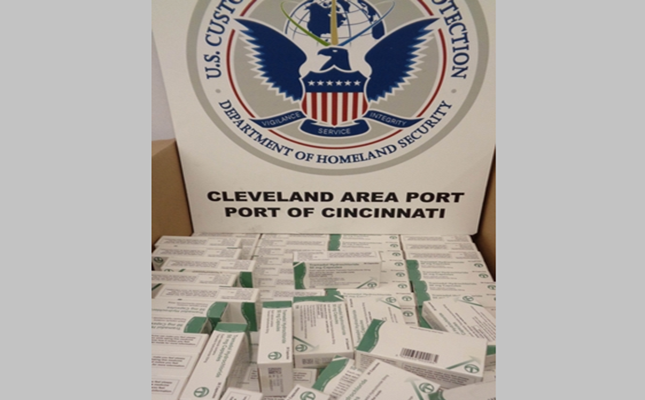
WASHINGTON, DC — THE Federation is once again under scrutiny after United States Customs and Border Protection (CBP) seized more than 30,000 tramadol pills that were destined for St. Kitts and Nevis.
According to a CBP media release published last week, the seizure was made on December 4 in Cleveland, Ohio.
Local law enforcement in St. Kitts and Nevis has since confirmed that it has not received any formal notification regarding the seizure.
Reports from the CBP office in Cleveland indicate that the tramadol tablets — a Schedule IV substance under the U.S. Controlled Substances Act — were discovered in a shipment arriving from Barbados and addressed to a recipient in St. Kitts and Nevis.
CBP officers reportedly inspected the parcel to determine its admissibility and uncovered small boxes containing 30 push pill tabs each, amounting to a total of 30,000 tablets. The 50mg tramadol pills were estimated to have a street value of approximately US$150,000.
“Most people hear about CBP seizing narcotics shipments,” said LaFonda D. Sutton-Burke, Director of Field Operations for the Chicago Field Office. “However, shipments of illegal prescription pills are very dangerous too. These pills were not regulated by the FDA and can contain harmful chemicals that could be poisonous.”
CBP explained that tramadol is a prescription medication used to treat moderate to moderately severe pain and works by altering how the brain perceives pain. Because of its potential for abuse — particularly among narcotic addicts, chronic pain patients, and some health professionals — tramadol is classified as a Schedule IV controlled substance in the United States.
Similarly, the United Kingdom’s National Health Service (NHS) notes that tramadol is typically prescribed when weaker pain medications are ineffective, such as following major surgery.
At this time, authorities have not disclosed the identity of the intended recipient in St. Kitts and Nevis. Officials noted, however, that given the quantity involved, the shipment may have been intended for a medical agency or pharmacy.
CBP also reminded the public that it provides guidance on import admissibility requirements and clearance procedures for e-commerce goods, and encourages buyers to ensure their purchases comply with all applicable state and federal import regulations.