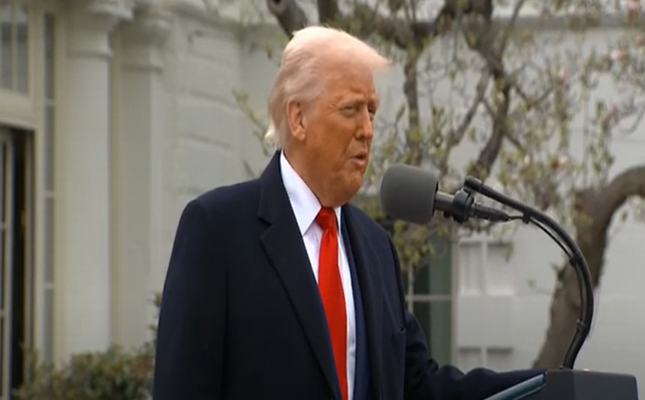
WASHINGTON, DC — US President Donald Trump has imposed sweeping new partial travel restrictions on several jurisdictions, with Dominica and Antigua and Barbuda among the latest countries affected under notices issued on December 16.
The two Caribbean nations join Haiti as regional territories impacted by recent changes to US immigration policy.
In a statement, the White House said the measures are intended to strengthen national security and immigration enforcement.
“The restrictions and limitations imposed by the Proclamation are necessary to prevent the entry of foreign nationals about whom the United States lacks sufficient information to assess the risks they pose, garner cooperation from foreign governments, enforce our immigration laws, and advance other important foreign policy, national security, and counterterrorism objectives,” the statement said.
US officials explained that the restrictions are country-specific and designed to encourage cooperation, noting that each affected nation faces unique circumstances. While no country-by-country evidence were provided, the administration claimed that some jurisdictions “suffer from widespread corruption, fraudulent or unreliable civil documents and criminal records, and nonexistent birth-registration systems -- sustemically preventing accurate vetting".
The White House further alleged that:
“Some nations refuse to share passport exemplars or law-enforcement data, while others permit Citizenship-by-Investment schemes that conceal identity and bypass vetting requirements and travel restrictions.”
In total, 20 additional countries were placed under partial restrictions, adding to those already affected. The new list includes Angola, Antigua and Barbuda, Benin, Côte d’Ivoire, Dominica, Gabon, The Gambia, Malawi, Mauritania, Nigeria, Senegal, Tanzania, Tonga, Zambia, and Zimbabwe.
For Antigua and Barbuda and Dominica, the measures target applicants and holders of B1, B2, B1/B2, F, M, and J visas, with a particular focus on the countries’ Citizenship by Investment (CBI) programmes. In its proclamation, the US government stated:
“Antigua and Barbuda has historically had Citizenship by Investment (CBI) without residency...Dominica has historically had CBI without residency.”
Both governments issued late-night written responses, expressing concern and disputing the characterisation of their programmes.
Antigua and Barbuda Prime Minister Gaston Browne said his government had taken note of the proclamation, which indicates that the restrictions are set to take effect on January 1. He expressed “deep disappointment” at the stated grounds, arguing that the claim regarding residency requirements no longer reflects current law.
Antigua and Barbuda, like other regional jurisdictions that operate CBI programmes, has been engaging with US officials on reforms.
“Over the past year, Antigua and Barbuda has worked closely and constructively with several departments of the United States Government to strengthen safeguards within our Citizenship by Investment Programme. We have engaged in good faith, accepted practical suggestions, and taken concrete steps to ensure that our Programme presents no risk whatsoever to the security of the United States,” Browne said.
He added that Parliament has already instituted a “mandatory 30-day physical residency requirement in Antigua and Barbuda as a strict condition for qualification for citizenship.”
“It is therefore an error to state that Antigua and Barbuda’s Citizenship by Investment Programme operates without a residency requirement,” Browne asserted.
Dominica’s Prime Minister Roosevelt Skerrit confirmed that his administration has formally written to the US President seeking “clarification and urgent dialogue.” He also pointed to ongoing cooperation with US authorities to strengthen the country’s CBI framework.
“Over the past several years, and particularly throughout 2024 and 2025, Dominica has worked closely with the United States through multiple channels, including the Office of the Prime Minister, the Ministry of Foreign Affairs, the Embassy of Dominica in Washington, D.C., and in coordination with the Eastern Caribbean Central Bank on behalf of OECS Member States,” Skerrit said.
He added: “These engagements addressed all concerns raised by the United States regarding CBI operations.”
Skerrit further noted that in October Dominica became the first OECS Member State to enact comprehensive CBI legislative reforms, introducing enhanced residency requirements, stricter name-change controls, strengthened due diligence and background checks, increased financial transparency, and the creation of an independent regulatory authority.
Despite those efforts, the new US decision has come as a shock to both governments and their citizens. Officials in Antigua and Barbuda and Dominica have now dispatched diplomats to Washington to engage US authorities and seek further clarification on the scope and implementation of the restrictions.