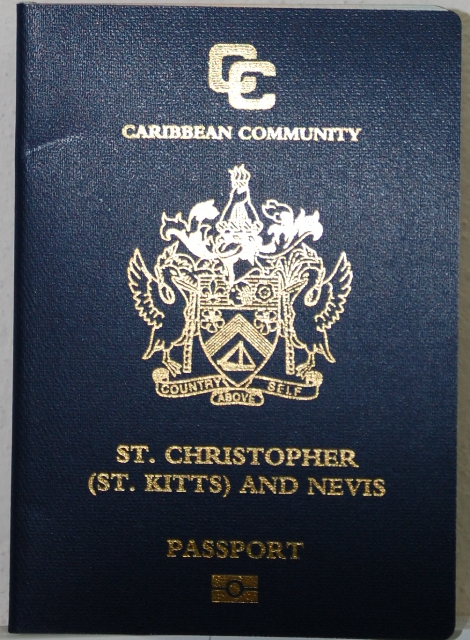
WASHINGTON, DC — AS debate continues across the region over reforms to Citizenship by Investment (CBI) programmes and their fallout, data show that St. Kitts and Nevis alone issued 56,015 CBI passports over a 10-year period.
The bulk of those passports — 48,844 — were issued between 2015 and 2023. In 2024, a further 6,437 passports were issued. According to the European Commission (E.C.), up to the end of April this year, just 734 passports had been issued, well below historical averages.
Access to data on the number of passports issued under the CBI programme, as well as the countries of origin of applicants, has traditionally been limited. However, reforms implemented by regional governments have led to a sharp decline in the programme, as outlined by Prime Minister Dr. Terrance Drew during his Budget presentation.
Despite the slowdown, figures released by the European Commission show that the St. Kitts and Nevis CBI programme remains the most sought-after in the region.
Between 2015 and 2023, the Federation received 19,655 applications. That figure dropped sharply in 2024, with just 223 applications recorded, while 171 applications were received up to April this year.
Rejection rates have remained relatively low compared to other jurisdictions. According to the Commission, 739 applications were rejected between 2015 and 2023, followed by 98 in 2024 and 86 up to April this year.
A detailed breakdown of applicants’ countries of origin has not been released by local authorities. However, CBI programmes across the region continue to face intense scrutiny, prompting governments over the past two years to implement reforms in collaboration with the United States and the European Union.
According to the EU, regional governments agreed to several measures, including cooperation on application denials, mandatory applicant interviews, enhanced due diligence by national Financial Intelligence Units, annual independent audits of programmes, the retrieval of revoked passports, and the suspension of applications from nationals of designated countries.
Amid ongoing concerns, the European Commission and its partner agencies have warned of the possible withdrawal of visa-free access to the Schengen Area. Officials have raised issues about the monitoring of individuals holding CBI passports upon entry into the European Union.
“In 2024, among the four Eastern Caribbean countries that reported data on the main nationalities of successful applicants (Saint Kitts and Nevis, Dominica, Saint Lucia, and Antigua and Barbuda), the majority of applicants continued to originate from countries that are subject to visa requirements for entry into the EU. Notably, successful applicants included 531 nationals of Syria, 365 of Iraq, and 333 of China,” the Commission revealed.
In the case of St. Kitts and Nevis, successful applicants included nationals from Russia, Belarus, Iran, Iraq, North Korea, and Afghanistan.
“Investor citizenship schemes inherently carry security risks for the Schengen area. No such scheme can be considered risk-free from a security and migration control perspective, and obtaining visa-free access to the EU continues to be a major benefit for beneficiaries of investor citizenship schemes that would otherwise be visa-required,” the Commission noted in a report published last week.