NEW YORK -- THE United Nations has welcomed a recent announcement by the United States that it will provide US$2 billion in assistance to support humanitarian efforts worldwide.
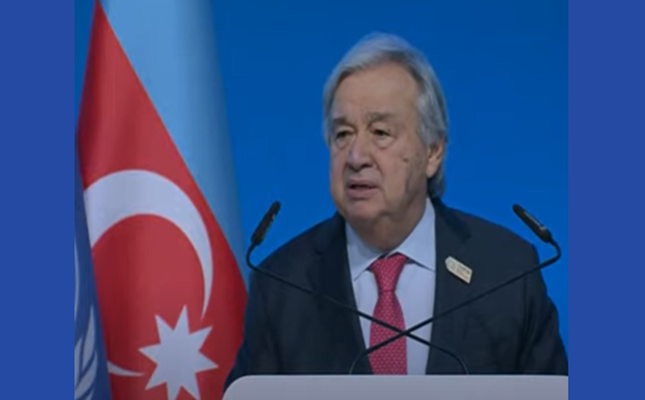
Secretary-General Antonio Guterres praised the US commitment, noting that the funding will bolster the United Nations’ lifesaving humanitarian work across the globe.
Since taking office, the Donald Trump administration has sought to scale back foreign assistance that it believes does not align with its “US first” policy. Against that backdrop, the announcement has been met with cautious optimism.
Stéphane Dujarric, Spokesman for the Secretary-General, said the contribution “will increase our ability to save lives, deliver to the most vulnerable and reduce human suffering.”
Speaking at the signing ceremony in Geneva, UN Emergency Relief Coordinator Tom Fletcher paid tribute to humanitarian workers operating under increasingly difficult conditions, describing the past year as “a very, very tough year for everyone engaged in humanitarian action.”
Despite those challenges, Mr. Fletcher said the agreement — formally known as a memorandum of understanding (MOU) — offers grounds for optimism.
“Millions, millions more will get that support that they so badly need,” he said, adding that the funding would help save tens of millions of lives in the year ahead.
The agreement covers 17 crisis-affected countries: Guatemala, Honduras, El Salvador, Ukraine, Haiti, Nigeria, Ethiopia, South Sudan, Mozambique, Myanmar, the Democratic Republic of the Congo (DRC), Sudan, Bangladesh, Syria, Uganda, Kenya and Chad, as well as the UN.
Mr. Fletcher emphasized that donors expect results, noting that accountability mechanisms will ensure that “every dollar we spend” is tracked to confirm it is saving lives. He also underlined that the agreement does not imply alignment on all issues, but rather reflects a shared focus on urgent, life-saving priorities.
He further highlighted the link between humanitarian action and diplomacy, calling for 2026 to be “a year of diplomacy and peacemaking.” Ending conflicts, he said, remains the most effective way to reduce humanitarian need.