WASHINGTON, DC — THE United Nations is warning that escalating fighting in Sudan’s South Kordofan state is driving mass displacement and pushing communities toward a full-scale humanitarian catastrophe.
According to the UN Office for the Coordination of Humanitarian Affairs (OCHA), civilians are facing intensifying violence, worsening shortages, and the near collapse of essential services as clashes continue between the Sudanese Armed Forces (SAF) and the paramilitary Rapid Support Forces (RSF). The conflict, which erupted in mid-2023, has been widely described as a struggle for control that has plunged the country into instability.
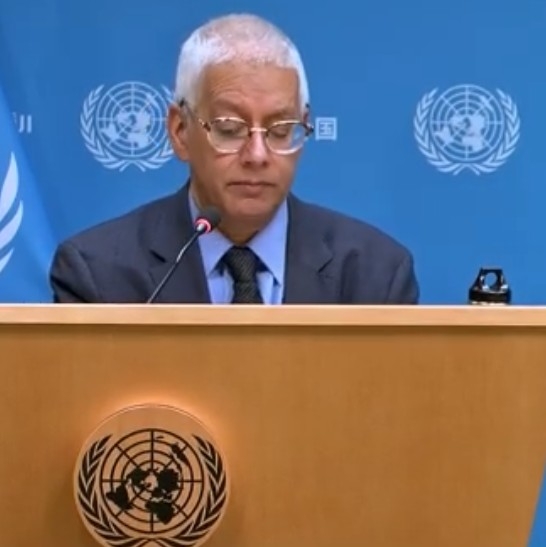
Farhan Haq, Deputy Spokesperson for the UN Secretary-General, told reporters that conditions in South Kordofan are deteriorating rapidly. He said the security situation in the city of Dilling worsened sharply last week, with heavy artillery shelling and drone strikes reported across multiple neighbourhoods. Local sources indicate that dozens of civilians may have been killed, but telecommunications outages are preventing independent verification of casualty figures.
Nearly half of Dilling’s population — an estimated 117,000 people — has fled. Many of those who remain are trapped inside the city without access to assistance. Markets have largely run out of food, livelihoods have been disrupted, and most health facilities have exhausted their medical supplies.
The state capital, Kadugli, is facing a similarly dire situation. More than 80 percent of its population — roughly 147,000 people — is believed to have fled to other parts of South Kordofan and beyond.
An OCHA assessment team visiting Abu Jubaiha this week reported a steady influx of displaced families from both Dilling and Kadugli, with between 250 and 300 people arriving each day. Some displaced persons said they had been traveling for weeks in search of safety, with reports of deaths occurring along the journey.
Across the broader Kordofan region, more than 88,000 people have been displaced since late October as fighting continues to uproot communities.
Humanitarian operations are ongoing where access is possible, but insecurity, supply shortages, and movement restrictions are severely limiting relief efforts. An interagency convoy carrying aid for Dilling and Kadugli remains stranded in El Obeid in neighbouring North Kordofan due to security concerns.
UN officials are calling for an immediate halt to attacks on civilians and civilian infrastructure and urging all parties to allow rapid, safe, and sustained humanitarian access.
The crisis extends beyond South Kordofan. The International Organization for Migration (IOM) estimates that between late October and mid-January, more than 127,000 people were displaced from El Fasher, the capital of North Darfur, amid heightened insecurity. Most remain within North Darfur, while others have sought refuge in surrounding states, placing additional pressure on already overstretched services.
With humanitarian needs rising across Sudan, OCHA is appealing for urgent donor support. The UN and its partners say $2.9 billion is required in 2026 to reach more than 20 million people in need nationwide.