WASHINGTON, DC – AS fighting continues to escalate across parts of the Middle East, growing concern is being expressed over the humanitarian consequences unfolding across the region.
United Nations agencies have warned that civilians in countries including Iran, Iraq and Lebanon are facing increasing risks as casualties rise and damage to civilian infrastructure worsens. Displacement is also growing as communities are forced to flee areas affected by the fighting.
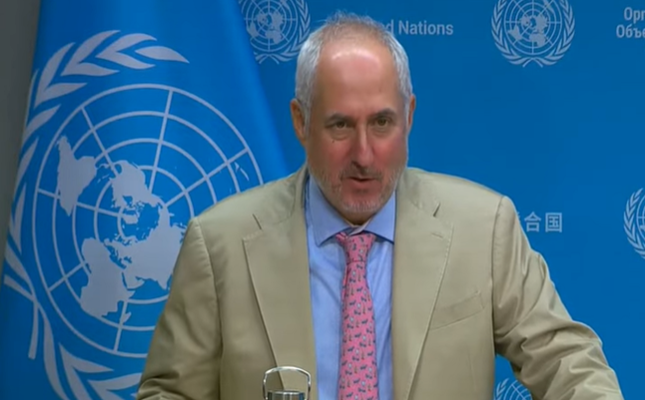
Speaking during a press briefing on yesterday (Mar. 9) at the United Nations Headquarters in New York, spokesperson for the Secretary-General, Stéphane Dujarric, highlighted particular concern over reports of strikes on oil facilities.
According to Dujarric, attacks on such installations could trigger serious environmental consequences. He said that strikes on oil facilities can have far-reaching impacts on air quality and safe water supplies, noting that the environmental fallout could affect millions of people.
The warning comes amid escalating tensions between the United States, Israel and Iran. The Donald Trump administration has launched a military campaign targeting Iran, reportedly with the backing of Israel, stating that the objective is to weaken the current Iranian leadership. Several strikes have been carried out on key facilities and government-linked targets.
Iran has responded with retaliatory attacks, striking United States military installations and other targets in allied countries across the region, including Bahrain, the United Arab Emirates and Qatar. Some of those strikes have reportedly damaged critical U.S. infrastructure and resulted in casualties, including the deaths of seven U.S. service members who succumbed to injuries sustained during the attacks.
Dujarric also pointed to warnings from the World Health Organization regarding the potential health risks linked to the ongoing conflict in Iran.
“We reiterate again that all possible precautions must be taken to protect civilians from the impact of hostilities and to avoid damage to health facilities, schools, water systems and other essential infrastructure,” he adde
Meanwhile, the humanitarian situation in Lebanon is also deteriorating. UN agencies report that civilians and civilian infrastructure continue to be heavily affected by the hostilities.
Evacuation orders remain in place for parts of southern Lebanon as well as Beirut’s southern suburbs, forcing large numbers of civilians to once again leave their homes.
Health services have also been severely disrupted. According to UN officials, five hospitals and dozens of primary healthcare centers have been forced to cease operations due to the ongoing violence.
Despite limited resources, humanitarian agencies say they continue to provide assistance to those displaced by the conflict. Aid efforts have included the distribution of hot meals, bedding, hygiene supplies and water, along with more than 80,000 litres of fuel to support tens of thousands of displaced people.
Children affected by the crisis are also receiving psychosocial support and access to alternative education programmes where possible.
However, the United Nations warns that resources are stretched and international support is urgently needed to meet the rapidly growing humanitarian needs.
He also noted that renewed commitment to the full implementation of UN Security Council Resolution 1701, which aims to maintain stability along the Israel–Lebanon border, will be central to ongoing diplomatic engagements.