WASHINGTON, DC — CONCERNS are mounting over the growing humanitarian fallout from the ongoing conflict in the Middle East, with hundreds of thousands displaced and global fears rising over spikes in fuel and food prices.
The United Nations has launched a fundraising appeal to support civilians affected by the fighting, while relief agencies ramp up emergency assistance across impacted areas.
According to UN officials, humanitarian partners have already distributed approximately 632,000 hot meals and 18,000 ready-to-eat meals to affected populations.
Relief efforts have also included the delivery of more than 382,000 litres of bottled water, along with over 1,700 cubic metres of clean water supplied through water trucking. In addition, 211,000 litres of fuel have been provided to maintain water services for an estimated 700,000 people.
The escalating humanitarian response comes as the United States and Israel intensify airstrikes on multiple locations in Iran, targeting sites believed to be linked to the country’s weapons capabilities.
Iran, however, has continued retaliatory strikes, reportedly targeting sites in neighbouring Gulf states, including gas depots and civilian areas, in an apparent effort to pressure regional governments to push Washington to halt the attacks.
At the same time, displacement across the region continues to rise sharply.
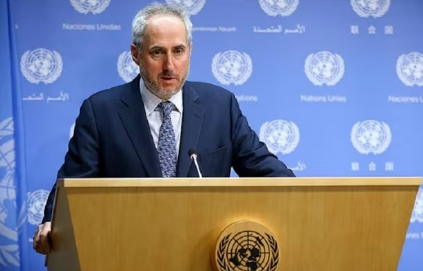
“Government figures indicate that many people continue to be displaced,” said Stéphane Dujarric, spokesperson for the UN Secretary-General, during a briefing at UN Headquarters in New York.
“More than 822,000 people, including nearly 300,000 children, have registered with the Government as displaced. Around 128,000 people are sheltering in nearly 600 collective sites across the country. We, of course, imagine that the actual number of displaced is much higher,” he added.
The UN also warned that the situation in southern Lebanon is deteriorating amid escalating hostilities between Israel and armed groups operating across the border.
The UN Interim Force in Lebanon (UNIFIL) reported continued rocket and missile fire into Israel, alongside Israeli airstrikes in Lebanese territory. The clashes have resulted in growing civilian casualties, displacement and widespread destruction.
Peacekeepers have observed artillery shelling in the eastern sector as well as ground incursions by the Israel Defense Forces up to seven kilometres inside Lebanese territory.
UN officials are urging all parties to halt hostilities and recommit to UN Security Council Resolution 1701, which aims to maintain stability along the Israel-Lebanon border.
Despite the volatile security environment, UN peacekeepers remain deployed in the region, helping civilians move to safer areas while continuing to monitor and report on developments. However, the deteriorating security situation has restricted peacekeeper movements in several locations.
UNIFIL said it will continue facilitating humanitarian access and supporting aid missions, including efforts by the Lebanese Red Cross, to deliver essential supplies to communities within its area of operations.
Meanwhile, the conflict is raising alarm over the potential disruption of critical shipping routes, particularly through the Strait of Hormuz, one of the world’s most important maritime chokepoints.
UN Under-Secretary-General for Humanitarian Affairs Tom Fletcher has issued an urgent call for safe and unhindered passage of humanitarian cargo through the strait.
He warned that any disruption could drive up the cost of food, medicine and other life-saving supplies, affecting vulnerable populations both in the Middle East and globally.
The impact is already being felt in some regions. In Gaza, the price of flour has surged by 270 percent, while global shipping costs have increased 16 percent compared to the same period last year.
Disruptions to key maritime routes could delay humanitarian shipments to crisis zones by as much as six months, further complicating aid operations worldwide.
A recent report by the UN Conference on Trade and Development (UNCTAD) also highlighted growing disruptions to commercial traffic around the Strait of Hormuz, underscoring the potential ripple effects for global trade.
Fletcher cautioned that without reliable humanitarian supply routes, millions could lose access to critical assistance.
Food, medicine and other supplies destined for operations in East Africa and parts of sub-Saharan Africa could become harder to transport and significantly more expensive, particularly at a time when famine threatens countries such as Somalia.
UN officials say discussions are ongoing with key parties to ensure humanitarian shipments can continue moving through the strategic waterway so aid reaches those whose lives depend on it.