WASHINGTON, DC – THE Caribbean Community (CARICOM), advocacy organizations, and people of African descent around the world have welcomed the successful passage of a United Nations resolution declaring the transatlantic trafficking of enslaved Africans and racialised chattel enslavement as the gravest crime against humanity.
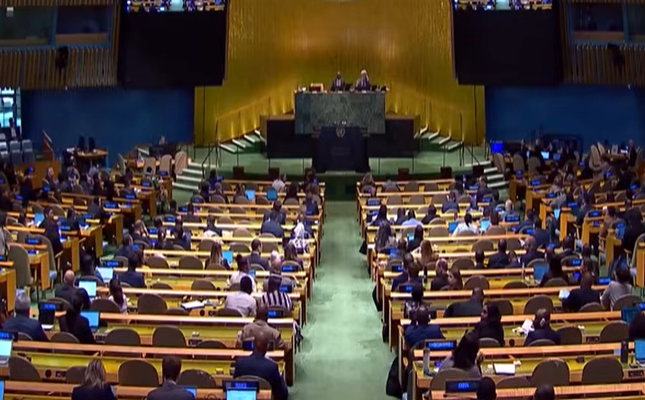
The resolution, titled “Declaration of the Trafficking of Enslaved Africans and Racialised Chattel Enslavement of Africans as the Gravest Crime Against Humanity,” was brought forward by Ghana and adopted by the UN General Assembly.
People of African descent — particularly in the Caribbean and the United States — have campaigned for greater recognition of the crimes of slavery and for reparations to address its lasting social and economic impact.
Following the vote, 123 of the UN’s 193 member states voted in favour of the resolution, 52 abstained, and three countries — Argentina, Israel, and the United States — voted against. According to international reports, all European Union (EU) member states abstained from the vote.
All member states of the Caribbean Community voted in favour of the Ghana-led resolution. The declaration states that the transatlantic slave trade and chattel enslavement represent humanity’s gravest crime due to their scale, duration, brutality, and lasting consequences. It also calls for the establishment of reparations frameworks, while emphasising remembrance, research, education, healing, and justice.
In a statement, CARICOM welcomed the adoption of what it described as a historic resolution by the United Nations General Assembly and reaffirmed its long-standing advocacy on the issue of reparatory justice.
“CARICOM has consistently advocated for the international community to take decisive action to repair the harmful legacies of African chattel enslavement and transatlantic trafficking, and will continue to work collaboratively for the implementation of the Resolution,” the regional body said.
Speaking in recognition of the day, United Nations Secretary-General António Guterres described the transatlantic slave trade as a profound betrayal of human dignity, outlining the scale and brutality of the system that forcibly removed millions of Africans from their homelands.
He noted that many died during the brutal Middle Passage, while generations who survived were enslaved in the Americas, exploited for labour, and denied their basic humanity.
Guterres said the slave trade formed the foundation of a global economic and social system built on exploitation, racism, and violence — a system whose legacy continues to shape modern societies through inequality and discrimination.
He stressed that remembrance alone is not enough, and called on the international community to confront the enduring consequences of slavery, including systemic racism and underdevelopment in many communities of African descent.
The Secretary-General also pointed to global initiatives such as the Second International Decade for People of African Descent and the African Union’s Decade of Reparations as important opportunities to push for meaningful action. These efforts, he said, should focus on three key areas: eradicating systemic racism, ensuring reparatory justice, and accelerating inclusive development with equal access to education, healthcare, housing, employment, and a safe environment.