Greetings!
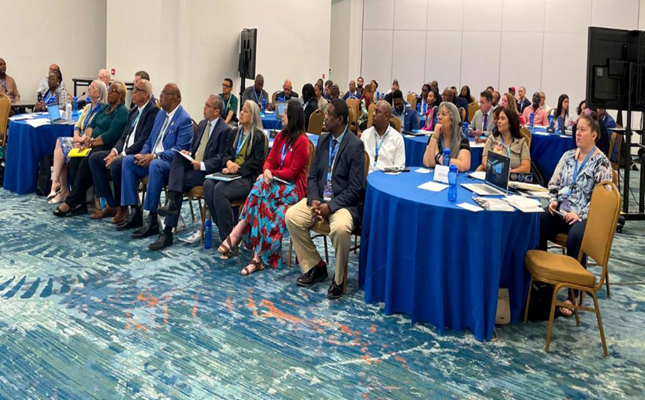
WILLEMSTAD, Curaçao (21 April 2026) -- Thirty countries and territories, represented by government officials, regional leaders, technical experts, and international partners, opened the Second Tsunami Ready Recognition Program (TRRP) Summit in Willemstad, Curaçao, on Monday, the 20th of April. They reaffirmed a shared commitment to strengthening tsunami preparedness, early warning systems, and community resilience across the Caribbean and nearby regions. The US State Department also provided funding for this activity.
Hosted in Curaçao over two days, the summit brings together representatives of UNESCO’s Intergovernmental Oceanographic Commission (UNESCO-IOC), the International Tsunami Information Center Caribbean Office (ITIC-CAR), national disaster management agencies, meteorological services, scientific institutions, and development partners. They will assess progress and advance the implementation of the Tsunami Ready Recognition Program throughout the region.
Delivering keynote remarks, Hon. Charles Cooper, Minister of Traffic, Transport, and Urban Planning of Curaçao, said the summit represents more than a ceremonial gathering.
“This summit is more than a meeting. It is a commitment to work together, to share knowledge, and to build stronger and safer communities for the future.”
Minister Cooper noted that while tsunamis occur infrequently, their impacts can be devastating. This underscores the need for sustained public awareness, coordinated planning, and continued investment in preparedness systems.
Opening the ceremony, Mr. Matthieu Péroche, Chair of the ICG/CARIBE-EWS Task Team on Tsunami Ready, described the Caribbean as a region of diverse coastal settings and governance contexts, but united by common exposure to tsunami risk.
“Tsunami Ready is first about saving lives — today and tomorrow. But it is also about strengthening regional solidarity. Better-prepared communities are better able to support others after a crisis, contributing to collective resilience.”
He encouraged participants to use the summit to exchange experiences, address challenges, and develop practical recommendations to guide future action.
Welcoming delegates on behalf of the host country, Dr. Albert Martis, Director of the Meteorological Department of Curaçao and Tsunami National Contact for Curaçao, said the presence of specialists from multiple countries reflected a strong regional and international partnership in support of safer coastal communities.
“This summit provides us with a vital platform to continue our discussions on how to best prepare our communities, reduce vulnerabilities, and ultimately minimize the loss of life and property.”
Dr. Martis also expressed appreciation to supporting governments and partner institutions whose financial, technical, and logistical assistance helped make the summit possible.
Representing the global program perspective, Dr. Laura Kong, Chair of the UNESCO-IOC Tsunami Ready Coalition, highlighted progress since the first summit in 2010 and the continued expansion of the initiative worldwide.
“Today, we have nearly 110 recognized communities in about 30 countries around the world, and another 75 that are in progress.”
She reminded delegates that tsunami risk remains real in the Caribbean and adjacent regions, where damaging and deadly events have occurred throughout history, and stressed the importance of sustaining awareness and readiness across generations.
The summit agenda includes reviews of regional implementation progress, identification of communities at risk, evaluation of program indicators, and discussions on inclusive approaches addressing the needs of individuals with disabilities, youth, migrants, and gender-responsive resilience planning. Delegates will also examine strategic links between the Tsunami Ready Recognition Program and broader regional and international early warning frameworks. The Tsunami Ready Recognition Program, led globally by UNESCO-IOC, supports at-risk coastal communities in meeting internationally recognized standards for preparedness, warning dissemination, public education, evacuation planning, and response capability.
For Small Island Developing States and coastal territories throughout the Caribbean, the program has become an increasingly important tool for translating hazard awareness into measurable community-level readiness.
The summit is expected to end with suggestions for the Intergovernmental Coordination Group for the Tsunami and Other Coastal Hazards Warning System for the Caribbean and Adjacent Regions (ICG/CARIBE-EWS), which will guide the next steps for member states.
Disclaimer
This article was posted in its entirety as received by SKNVibes.com. This media house does not correct any spelling or grammatical error within press releases and commentaries. The views expressed therein are not necessarily those of SKNVibes.com, its sponsors or advertisers