WASHINGTON, DC – THE United Nations is continuing to raise alarm over escalating conflicts across several African countries, where rising death tolls and mass displacement are worsening humanitarian conditions.
From Sudan and South Sudan to the Democratic Republic of the Congo and Mali, ongoing internal conflicts have left thousands affected and placed additional pressure on humanitarian agencies operating on the ground.
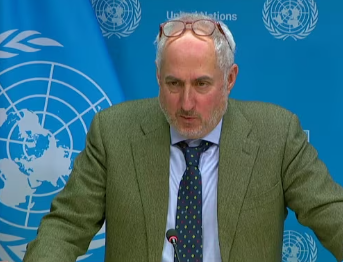
During a press briefing at the United Nations Headquarters in New York, spokesperson for the Secretary-General, Stéphane Dujarric, outlined growing concerns over the deteriorating situations.
Speaking on Sudan, Dujarric said drone strikes targeting the airport in the capital, Khartoum, continue to severely affect humanitarian operations.
“Flights are still suspended today after drones targeted the airport yesterday and other parts of the city,” he said. “As we mentioned to you, that airport is vital to humanitarian access, particularly for the movement of humanitarian personnel. And as you will recall, our UN team has resettled in Khartoum."
Dujarric also reported that a day after a fuel station and tanker were hit near Kosti in White Nile State, drones reportedly struck several locations in the city, including two fuel stations in a busy commercial area.
“There were reports of casualties, and basic services, as a result, were disrupted,” he added.
Meanwhile, fighting in Darfur continues to worsen conditions for civilians, particularly in El Fasher in North Darfur State. Dujarric revealed that new data from the International Organization for Migration (IOM) shows that more than 138,000 men, women and children were displaced between October of last year and March of this year from El Fasher and nearby villages.
“We continue to call for an immediate stop to the fighting; for civilians and civilian infrastructure to be protected, and not be targeted; and for aid to be allowed to reach people swiftly, safely, and without any obstruction.”
In the Democratic Republic of the Congo, Dujarric said humanitarian negotiations led by the UN’s Office for the Coordination of Humanitarian Affairs (OCHA) have resulted in improved access to the Plaine Savo displacement site in Ituri Province.
“This has enabled the World Food Programme and our partners to resume food distributions today for more than 71,000 displaced people at the site,” he stated. “This is the first such delivery since December, when a surge in violence in the area sharply constrained humanitarian access.”
Earlier this week, Humanitarian Coordinator Bruno Lemarquis and head of the OCHA office Carla Martinez visited the site to assess conditions and meet with local authorities, humanitarian partners and displaced families.
“Mr. Lemarquis reiterated the need to protect civilians and called on all parties, including the military, to ensure safe, secure access for aid organizations,” Dujarric noted.
Despite the renewed access, humanitarian needs remain severe.
“As clashes continue in surrounding areas, displaced families are facing acute food shortages and grave safety concerns, while humanitarian access remains difficult,” he explained.
“Since December of last year, at least 21 displaced people have been killed while working in nearby fields as they search for food; that is what local people are telling us.”
Dujarric also provided an update from the UN peacekeeping mission, MONUSCO, which has been assisting students in conflict-affected areas.
“At the request of school principals, final-year secondary students from three schools were escorted by peacekeepers from Gina, in Djugu territory, to Bunia, the capital of Ituri, to take the state examination tests,” he said.
Djugu territory was recently the scene of violent clashes involving armed groups, which resulted in civilian casualties.
“Nearly 200 people caught under fire from members of the CRP (Convention for the Popular Revolution) armed group had been rescued by UN peacekeepers,” Dujarric added.
“After the exams, which end on 7 May, the students will be taken back to Gina under peacekeeping guard, and we wish them luck in these exams.”
On the situation in Mali, Dujarric said the UN’s human rights office remains deeply concerned over worsening violence following coordinated attacks in several cities and towns last week.
“The coordinated attacks in several cities and towns last week resulted in heavy casualties reported among civilians and forced many more to flee their homes,” he said.
“There were additional civilian casualties following clashes reported over the weekend.”
UN High Commissioner for Human Rights Volker Türk has since called for an immediate end to the fighting. “He urges all parties to uphold international humanitarian law and international human rights law, including by ensuring the protection of civilians and civilian infrastructure,” Dujarric stated.
The Malian authorities have announced an investigation into the attacks which occurred between April 25 and 26.