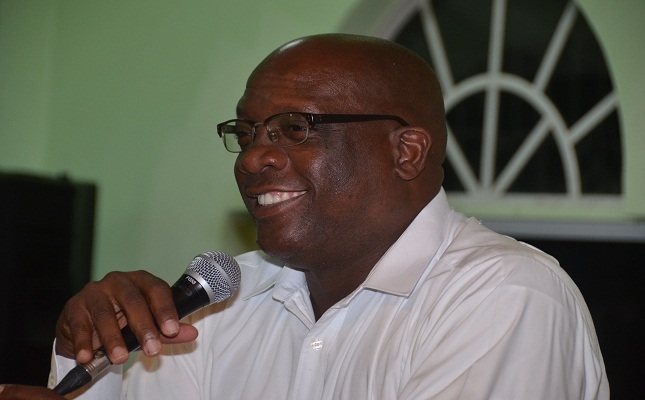
BASSETERRE, St. Kitts – FORMER Prime Minister Dr. Timothy Harris has commended the significant contributions of the Guyanese community to the development of St. Kitts and Nevis, describing the relationship between the two CARICOM nations as strong and mutually beneficial.
The Guyanese community represents one of the largest expatriate populations in the Federation and has played an important role in several sectors, including agriculture, education, business, hospitality, sports, media and other areas critical to national development.
SKNVibes News recently spoke with Dr. Harris during celebrations marking Guyana’s 60th Independence Anniversary. While reflecting on the longstanding ties between the two countries, he described the relationship as “cordial” and highlighted Guyana’s enduring commitment to regional integration through the Caribbean Community (CARICOM).
Looking back on Guyana’s journey over the past six decades, Dr. Harris noted that the South American nation has demonstrated remarkable resilience and progress while remaining committed to the regional movement.
“I suspect that the visionaries may have wanted to see us integrated more deeply, but certainly we continue on a progressive path,” Harris said. “Guyana has found love and support in our country. Back in the 2000s, when our sugar industry required significant manpower, Guyana and the Dominican Republic were among the countries from which we sourced the bulk of our labour force.”
The People's Labour Party leader emphasized that Guyanese nationals have become an integral part of the Federation’s productive sectors and continue to make meaningful contributions to national growth and development.
“Over time, as was on display today, we are seeing more of the diversity of Guyana reflected through its culture, food and music. This is further evidence of the deepening people-to-people integration taking place throughout the region,” he stated.
Harris also pointed to Guyana’s economic transformation in recent years, driven largely by its offshore oil discoveries. The country has recorded some of the highest economic growth rates in the world, reshaping its economic landscape and creating new opportunities for regional cooperation.
He believes Guyana’s success can bring benefits to St. Kitts and Nevis, particularly in areas such as agriculture, where the Federation has historically benefited from training and expertise provided by Guyanese institutions.
“Guyana now stands proudly as the fastest-growing economy within CARICOM, with tremendous resources in energy, the potential for food security and industrial development,” Harris said. “Its prosperity is increasingly linked to the wider region. And so we hope Guyana continues along a path of sound development and that its newfound wealth translates into meaningful benefits for its people while helping to address labour shortages across the many islands of the Caribbean.”
The former prime minister also highlighted the importance of education and human capital development, expressing a desire to see institutions such as the University of Guyana and the country's technical colleges continue to expand their reputation for excellence.
“Guyana possesses tremendous capacity to empower people through education, and many of our own citizens have benefited from pursuing agricultural and other studies there,” Harris noted.
Asked what lessons St. Kitts and Nevis could learn from Guyana’s 60 years of independence, Harris pointed to the resilience of the Guyanese people and the importance of leveraging natural resources responsibly. “We have seen that despite the ups and downs, the people of Guyana have remained resilient,” he said. “We have also come to recognize the critical importance of natural resources. Guyana has always been blessed with strong agricultural potential.”
Harris recalled efforts during his time in government to explore ways of creating additional value from the sugar industry, including the possibility of using sugarcane by-products for energy generation. However, he acknowledged that the Federation’s small size posed significant limitations.
“We recognised that smallness is a real constraint to development and that we had to identify other areas of opportunity,” he said.
Ultimately, Harris believes the most important lesson from Guyana’s experience is the value of disciplined and inclusive development. “The critical lesson is that countries, whether small or large, must follow a disciplined path of development and inclusiveness. ” he stated.
Guyana celebrated its Diamond Jubilee on May 26 with major events across the country and throughout the Caribbean diaspora. In St. Kitts and Nevis, members of the Guyanese community joined in commemorative activities marking the milestone anniversary.