WASHINGTON, DC — AS countries across Africa continue to grapple with worsening humanitarian crises, the United Nations says it is providing lifesaving assistance to millions of people while appealing for additional funding to sustain its response.
One of the hardest-hit countries remains Sudan, where fighting between the Sudanese Armed Forces (SAF) and the paramilitary Rapid Support Forces (RSF) has triggered widespread displacement and deepened the humanitarian emergency.
The United Nations Office for the Coordination of Humanitarian Affairs (OCHA) said that during the first six months of this year, humanitarian partners reached approximately 11 million men, women and children across Sudan with at least one form of assistance. Despite those efforts, the conflict has displaced more than 14 million people. Of those, only 1.7 million have received multi-sector assistance, including healthcare, education, protection, food security and other essential services.
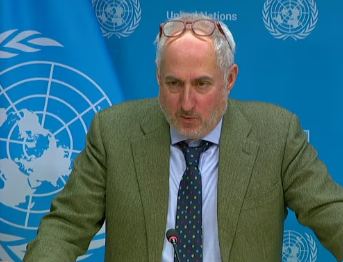
According to the UN, the biggest obstacle remains a severe funding shortfall, leaving significant gaps in the humanitarian response. Speaking during a media briefing, UN Secretary-General's Spokesman Stéphane Dujarric said this year's humanitarian appeal for Sudan is only 39 per cent funded.
He urged the international community to provide additional support to help humanitarian agencies reach the millions of people still in need. Meanwhile, in Chad, Humanitarian and Resident Coordinator François Batalingaya announced a US$2 million allocation from the Regional Humanitarian Fund for West and Central Africa to address urgent needs, including water, sanitation, hygiene and emergency shelter.
The UN said Batalingaya, together with officials from the Government of Chad, donor countries and several UN agencies, recently concluded a mission to Lac Province in western Chad to assess the humanitarian situation following a new wave of displacement caused by attacks by non-state armed groups.
In the Democratic Republic of the Congo (DRC), escalating violence along the border between Ituri and North Kivu provinces has forced thousands more people from their homes, including in areas affected by the ongoing Ebola outbreak.
Dujarric told reporters that local civil society organisations have reported at least 60 civilian deaths since July 12, including 30 people who were reportedly killed on Tuesday in Mambasa Territory during a series of attacks on villages along the Ituri–North Kivu border. The violence has displaced more than 25,000 people, many of whom have fled to Beni Territory in North Kivu.
According to Dujarric, many displaced families are being sheltered by already vulnerable host communities or are taking refuge in abandoned buildings.
He noted that the insecurity is also affecting areas where humanitarian partners continue to support the Ebola response, which has claimed nearly 1,000 lives.
In Tshopo Province in northeastern DRC, Prime Minister Judith Tuluka visited Kisangani alongside UN Humanitarian Coordinator Damien Mama and the UN's Senior Ebola Coordinator, Julian Harneis, to support the country's response to the outbreak. Recent Ebola cases reported in Kisangani have raised concerns about the virus spreading further along the Congo River. The UN said it and its humanitarian partners are urgently expanding their response by strengthening infection prevention and control measures, increasing treatment capacity, and preparing for safe and dignified burials.
The organisation also renewed its call for the protection of civilians and for safe, unhindered humanitarian access to all communities affected by the violence and the Ebola outbreak.