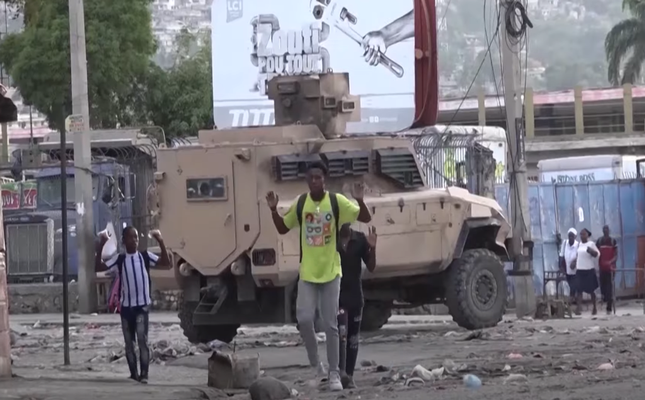
WASHINGTON, DC – UNITED Nations officials are raising alarm over a sharp increase in gender-based violence in Haiti as armed gangs continue to expand their control, worsening the country's humanitarian crisis.
As gangs tighten their grip on large sections of the country, thousands of people have been forced from their homes, leaving many women and girls increasingly vulnerable to sexual violence and other forms of abuse.
During a press briefing yesterday (Jul. 29), officials from the Office for the Coordination of Humanitarian Affairs (OCHA) reported an alarming surge in gender-based violence, driven by ongoing insecurity and mass displacement.
Farhan Haq, Deputy Spokesman for the UN Secretary-General, said more than 3,000 incidents of gender-based violence were recorded between April and June this year, with over 1,000 cases reported in June alone.
He noted that the latest figures bring the total number of reported incidents to 5,500 during the first half of 2026, marking a significant increase compared with the just over 8,000 cases recorded throughout all of last year.
"Our humanitarian colleagues note that nearly 70 per cent of the cases in the last six months involved rape, many of them gang rapes, reportedly perpetrated by armed groups. More than half of the survivors were displaced," Haq said.
He added that humanitarian partners have been able to provide some survivors with medical care, psychosocial support and protection services, including access to safe spaces for women and girls. However, he stressed that the needs continue to far exceed the available resources.
"Our partners also note that the situation is unfolding against a backdrop of mass displacement and forced returns. According to the International Organization for Migration (IOM), nearly 1.5 million people are displaced within Haiti, with more than 140,000 Haitians forcibly returned to the country between January and June 2026. Many return without identity documents or resources.
He noted that despite extremely challenging operational conditions, the UN continues to provide essential protection services, including support to obtain civil documentation and information on rights and available services.
However, insecurity, access restrictions, and funding shortfalls continue to limit the reach of humanitarian assistance.