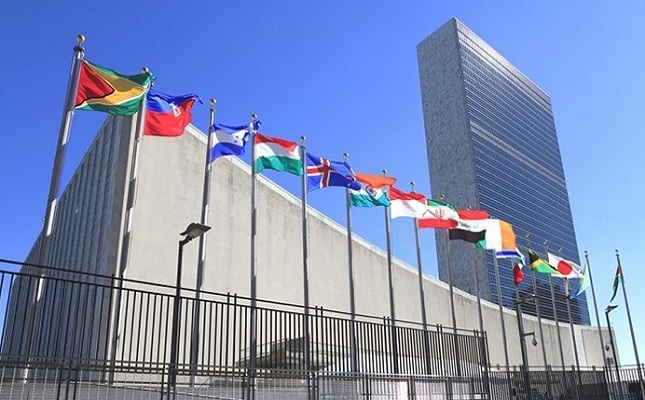
WASHINGTON, DC – WOMEN and children continue to bear the heaviest burden of the Ebola outbreak in the eastern Democratic Republic of the Congo (DRC), as the United Nations and its humanitarian partners intensify efforts to contain the disease and prevent its spread.
Officials from the UN Office for the Coordination of Humanitarian Affairs (OCHA) said the outbreak is unfolding in Ituri Province, where nearly one million people have been displaced, about 80 percent of them women and children.
Since the Bundibugyo strain of the Ebola virus emerged in May, more than 4,000 confirmed cases and nearly 2,000 deaths have been recorded across the country.
The United Nations Children's Fund (UNICEF) reported that more than 300 children have died since the outbreak began. Although children account for nearly one-quarter of confirmed cases, they represent almost one-third of all Ebola-related deaths.
The outbreak is also disrupting access to critical healthcare services.
"As we've mentioned earlier this week, the outbreak is also severely disrupting essential healthcare. In the hardest-hit areas, use of health services has dropped by more than 40 percent in recent months, as fear of infection keeps people away," said Farhan Haq, Deputy Spokesman for the UN Secretary-General.
The United Nations Population Fund (UNFPA) warned that fear of infection, coupled with overstretched health services, is preventing many pregnant women from seeking essential medical care.
Haq told reporters that maternal deaths in Ituri have nearly doubled since the outbreak began, with about six women dying each week from childbirth-related complications. He added that Ebola infection during pregnancy remains associated with an almost universal loss of the fetus.
OCHA said restoring public confidence remains critical to controlling the outbreak.
Working alongside the DRC Ministry of Public Health, the World Health Organization (WHO), the Africa Centres for Disease Control and Prevention (Africa CDC), UNICEF and other partners have deployed approximately 13,000 community workers. Those teams have reached more than 2.4 million people with information on Ebola prevention and early detection while conducting over 500,000 household visits to combat misinformation and encourage people to seek treatment early.
Meanwhile, WHO announced that its Technical Advisory Group on Ebola Vaccine Research is recommending a clinical trial in the DRC for the Ervebo vaccine, currently the only licensed Ebola vaccine. The agency said it is working with partners to begin the trial as soon as possible.
South Sudan Strengthens Preparedness
In neighbouring South Sudan, OCHA said it continues to support government-led efforts to prepare for a possible Ebola outbreak.
Although no cases have been confirmed in the country, the outbreak in the DRC and the steady movement of people across the shared border continue to pose a significant risk.
"These preparedness efforts include surveillance to detect cases early, screening at points of entry, training health workers, providing medical supplies, and community awareness campaigns," Haq said.
Health authorities reported that more than 135,300 travellers were screened at South Sudan's points of entry during this month alone.
More than 300 healthcare workers and frontline personnel have also been trained in screening, triage, infection prevention and control, patient referrals and safe burial procedures. In addition, more than seven tonnes of emergency medical supplies have been pre-positioned in Yambio near the DRC border.
However, ongoing insecurity continues to hamper humanitarian operations.
Between January and July, OCHA recorded 451 incidents that obstructed or threatened humanitarian activities across South Sudan. Along the Yei-Morobo corridor, 32 humanitarian workers have been abducted since January last year, highlighting the dangers faced by aid agencies operating in areas considered at highest risk for Ebola transmission.
The UN also announced that South Sudan's Government and its humanitarian partners have finalised the 2026 Floods and Drought Preparedness Response Plan.
Last year's floods affected more than 1.3 million people, while forecasts indicate an increased risk of drought alongside continued flooding in some areas this year. The plan estimates that flooding could impact more than 830,000 people—more than a quarter of whom are already displaced—while nearly 1.7 million people could be affected by drought.
To strengthen the country's resilience, the plan includes a government-led US$215 million package to improve flood infrastructure, expand early warning systems and support anticipatory action through 2027.