WASHINGTON, DC — THE World Health Organization (WHO) is preparing to launch a Phase 3 trial of an Ebola vaccine as health officials race to contain the deadly outbreak in the Democratic Republic of the Congo (DRC), where the death toll has now climbed above 2,000.
The United Nations said Tuesday (Aug.11) that humanitarian agencies continue to expand treatment and disease surveillance as the outbreak spreads, even as violence in eastern DRC complicates the response.
UN Deputy Spokesman Farhan Haq said national health authorities reported that the number of deaths has doubled over the past 20 days, with an average of about 50 people dying each day.
According to the WHO, between 60 and 70 percent of Ebola-related deaths occur within communities, with many patients arriving at health facilities too late or unable to access care.
"We, along with our partners, continue to support the response, but our work is hindered by insecurity," Haq said.
The UN Office for the Coordination of Humanitarian Affairs (OCHA) reported that at least 13 civilians were killed, several others abducted and homes burned during an August 7 attack on the village of Banana École in Ituri Province. More than 28,000 people fled to Mambasa Centre, where some 36,000 displaced people have already been sheltering since April.
OCHA said it continues to support local authorities while assessing humanitarian needs and again called on all parties to the conflict to protect civilians and allow aid workers safe access to affected communities.
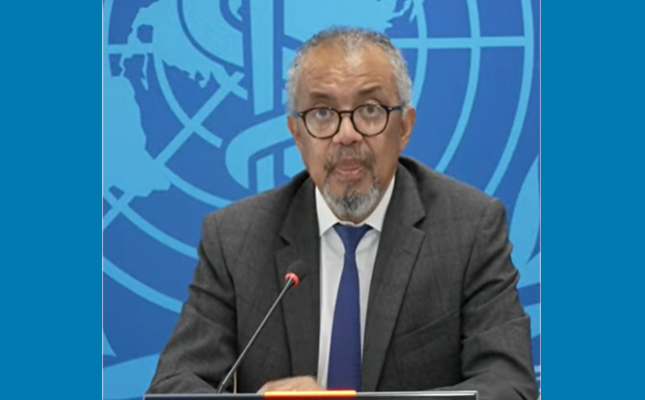
Speaking at a Wednesday (Aug. 12) news briefing, WHO Director-General Dr. Tedros Adhanom Ghebreyesus announced that the agency is moving ahead with a Phase 3 clinical trial of an Ebola vaccine targeting the Bundibugyo strain.
He cautioned that researchers do not yet know whether the vaccine is effective against Bundibugyo disease in humans, but said the trial offers the fastest path to determining whether it can help control the current outbreak and protect against future ones.
"We call on all partners to support and accelerate this trial," Tedros said.
He also noted that research into Ebola treatments is advancing, with the WHO-sponsored PALM clinical trial reaching 100 enrolled patients.
"This trial demonstrates that even in the midst of a challenging outbreak, it's possible to mobilise research rapidly and responsibly," he said.
Tedros warned that the greatest challenge now is delivering vaccines, treatments and other interventions quickly enough to outpace the outbreak.
He said the Continental Preparedness and Response Plan requires US$518 million, but only US$264 million—just over half of the needed funding—has been disbursed.
"We need financing that's timely, impactful and sustainable," he said. "We also need access and security in the affected areas to ensure the response can operate safely and effectively."
The WHO chief also paid tribute to frontline health workers risking their lives to contain the outbreak.
Separately, Tedros voiced concern over recent changes to childhood vaccination policy in the United States, saying they are not supported by the best available scientific evidence.
"Vaccines, including the MMR vaccine, are safe and do not cause autism," he said, adding that decades of research continue to support routine childhood immunisation.