WASHINGTON, DC – THE United Nations is scaling up its response to the Ebola outbreak in the Democratic Republic of the Congo, as health authorities report more than 5,200 confirmed cases and nearly 2,500 deaths as of August 18.
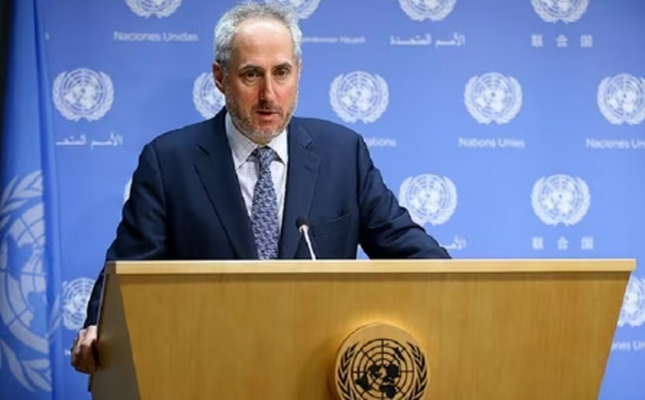
UN spokesperson Stéphane Dujarric said during a media briefing at UN Headquarters in New York that the Government and humanitarian partners are intensifying efforts around five key priorities.
These include tripling safe-care capacity, strengthening community engagement, doubling the number of safe and dignified burial teams, expanding disease surveillance and increasing support for vulnerable communities.
The outbreak was declared by national authorities on May 15 and is being driven by the Bundibugyo virus, a strain of Ebola associated with a high fatality rate.
According to to the United Nations, government figures point to 730 patients remaining isolated or hospitalized, while 1,040 people have recovered. The reported case fatality rate stands at 46 percent.
Vaccine trials are also underway, although some candidates are still in the third phase of testing and may not be available for wider use for some time.
As part of the response, the DRC Government has launched the “Congo River Without Ebola” initiative with support from the UN and other partners.
Dujarric said the initiative will strengthen surveillance and preparedness along the Congo River, an important transportation route linking villages, markets and several provinces.
The programme will focus on priority ports and transit points, improve early warning and referral systems, and strengthen preparedness among river communities and people travelling by boat.
The World Health Organization has also allocated 70,000 doses of the Ebola Zaire vaccine to the DRC.
Dujarric said the doses will be used to protect frontline health workers and support a clinical trial examining the vaccine’s potential against the Bundibugyo virus.
Meanwhile, the UN peacekeeping mission continues to provide security for humanitarian workers responding to the outbreak.
Earlier this week, the mission established a standing military presence in Mambasa territory in Ituri to support Ebola response teams following nearby security incidents.
In Fataki, the mission also engaged community leaders after threats were made against medical personnel, with the aim of improving information sharing and supporting a faster response by national security forces.
However, the response continues to face major challenges, including inadequate health infrastructure, ongoing conflict in the epicentre of the outbreak and public distrust of medical authorities.
Those challenges have raised concerns that the disease is spreading faster than health teams can contain it, with the WHO warning that the outbreak is “outpacing the response.”