WASHINGTON, DC – THE World Health Organization (WHO) says it is seeking additional information from Russia following reports of a laboratory worker who died after developing severe pneumonia, amid concerns that the case could be linked to pneumonic plague.
Media reports that surfaced on Friday (Oct. 2), said the worker was employed at the Irkutsk Antiplague Research Institute in Russia and had been hospitalized with severe pneumonia before dying. Initial reports suggested the illness may have been pneumonic plague following an accidental laboratory exposure.
However, the WHO says it has not received confirmation from Russian authorities that a case of plague was diagnosed.
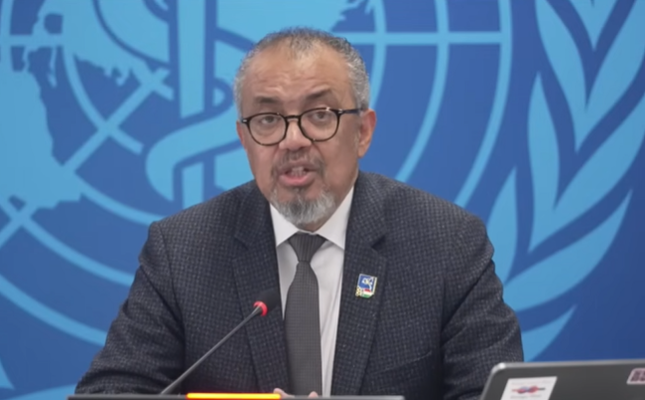
Speaking during a press briefing on Thursday (Oct. 7), WHO Director-General Dr Tedros Adhanom Ghebreyesus said the agency was aware that the Russian government had held a meeting on October 2 after authorities suspected that a resident of the Irkutsk Oblast had contracted a dangerous infection.
Ghebreyesus said that on October 3, the WHO requested additional information from the Russian Federation in accordance with the International Health Regulations.
He said Russia responded that no recent case of plague had been reported in the Irkutsk Oblast, while approximately 200 contacts had been placed in quarantine.
“However, WHO has requested further information on the laboratory tests conducted on the individual who died and the contacts, more detail on what prompted the public health measures, and details about the health status of the contacts,” Ghebreyesus said.
The WHO also sought further verification of media reports concerning a second employee who was reportedly suffering from pneumonia of undetermined cause.
The agency has offered technical support to Russia in relation to plague, as well as laboratory biosafety and biosecurity.
Ghebreyesus said the WHO was not yet in a position to conduct a full risk assessment because it did not have all the information surrounding the incident.
“Timely, complete and transparent information sharing under the International Health Regulations is essential to clarify conflicting reports and enable an accurate assessment of potential public health risks,” he said.
What is pneumonic plague?
According to the U.S. Centers for Disease Control and Prevention (CDC), pneumonic plague is a severe form of plague that affects the lungs. Patients can develop fever, headache, weakness and rapidly developing pneumonia, accompanied by shortness of breath, chest pain, coughing and, in some cases, bloody or watery mucus.
The CDC says pneumonic plague can develop when plague bacteria spread to the lungs in a person with untreated bubonic or septicemic plague. It can also occur when a person inhales infectious droplets expelled by another person or animal with pneumonic plague.
The agency describes pneumonic plague as the most serious form of the disease and the only form of plague that can be transmitted directly from person to person.
At this stage, however, the WHO says additional information is needed before the circumstances surrounding the death in Russia and any potential public health risk can be fully assessed.