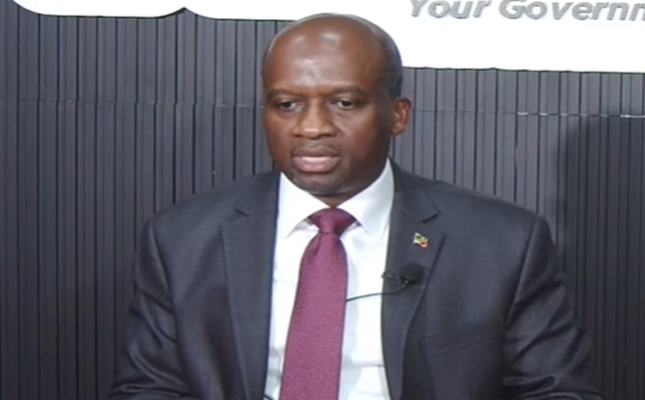
BASSETERRE, St Kitts — THE St Kitts and Nevis Citizenship by Investment (CBI) Programme remains in a strong position despite challenges facing regional programmes and the wider international community, according to Citizenship by Investment Unit (CIU) Chair Calvin St Juste.
Speaking on the government’s InFocus programme, St Juste said the programme’s recent reforms were designed to strengthen its long-term sustainability, even if they meant fewer applicants at certain investment levels and an immediate reduction in potential revenue.
Over the past two years, the government has introduced significant changes, including raising the minimum investment threshold to US$250,000.
St Juste acknowledged that lower investment requirements could attract more applicants and generate greater revenue in the short term. However, he said the government chose to prioritise the programme’s long-term viability and international standing.
“If the value or perhaps the investment amount was below that, significantly below that, then yes, they had more people that came to the programme and yes, that in itself contributed to more revenue,” he said.
“However, what we saw was the fact that the programme needed to go through a sustainable timeframe, and so we raised the minimum. Obviously, when you raise the minimum, you would have less individuals in that price point. But we were not thinking short term; we were thinking long term.”
St Juste argued that the reforms have helped protect the programme’s reputation with international partners, pointing to the travel privileges enjoyed by St Kitts and Nevis passport holders.
He said citizens continue to benefit from visa-free travel to the United Kingdom and European Union countries, while maintaining favourable prospects for obtaining US visas.
"...what I can say is the St Kitts and Nevis Programme is the only programme that has not been impacted with any negative aspect with our international partners," he added.
The CIU chair explained that the government’s decision to raise the investment threshold was also intended to attract investors who would not undermine the programme’s reputation or negatively affect the lives of citizens.
He said the authorities wanted passport holders to travel with confidence, without facing additional scrutiny because of concerns about their country’s citizenship programme.
“You know there’s an apprehension when you land in a strange country and you’re going through the immigration and customs. People have that concern,” he said.
“We wanted to ensure that you can confidently walk through those lines and feel confident that you’re not going to be pulled into some type of area because there’s some negative aspect with your country or perhaps with the passport.”
According to St Juste, the government deliberately accepted the possibility of an immediate revenue impact in pursuit of longer-term benefits.
He also pointed to the programme’s performance in the latest CBI Index, which ranked St Kitts and Nevis first among the five Caribbean citizenship-by-investment programmes assessed for the sixth time.
St Juste further cited the removal of a US Financial Crimes Enforcement Network (FinCEN) advisory dating back to 2014, saying the development had helped strengthen international confidence in the programme.
He argued that the revenue figures often cited in discussions about CBI do not reflect the full range of investments made through the programme.
According to St Juste, reported figures generally focus on cash deposited into the government’s Consolidated Fund, while other investments are directed towards approved projects intended to benefit the public.
He pointed to the government’s Public Benefit Options, which allow investment funds to support approved capital projects rather than placing the entire financial burden on the government.
St Juste said the approach could help finance projects that directly benefit residents while reducing pressure on public finances and the need for additional taxation.
As an example, he cited the rebuilding of Basseterre High School, arguing that the project demonstrates how investment can be channelled into infrastructure with a direct impact on citizens.