WASHINGTON, DC – ONGOING fighting in parts of the Democratic Republic of Congo (DRC) is further complicating efforts to contain the deadly Ebola outbreak, as insecurity continues to disrupt healthcare operations and force civilians from their communities.
The deteriorating security situation comes as health authorities battle to contain the outbreak, which has claimed thousands of lives, while neighbouring countries and governments further afield introduce travel restrictions in an effort to prevent the virus from spreading across borders.
Officials at the United Nations Office for the Coordination of Humanitarian Affairs (OCHA) reported that dozens of civilians were killed overnight on Thursday in Beni territory, North Kivu province.
According to local sources, at least 30 civilians were killed in the locality of Contina Loya during the attack. Several homes were reportedly set ablaze, while a health centre was destroyed, leaving several patients dead.
The violence is also having a direct impact on the Ebola response. OCHA said humanitarian workers had reported that people who came into contact with Ebola patients fled an observation centre amid the insecurity. Response teams were subsequently forced to suspend operations in the affected area, making it increasingly difficult to trace potential infections and prevent further transmission.
The UN agency renewed its call for all parties to protect civilians, respect international humanitarian law and ensure safe and unhindered access for humanitarian and healthcare workers.
It warned that continued violence was not only claiming civilian lives but also undermining efforts to contain the outbreak.
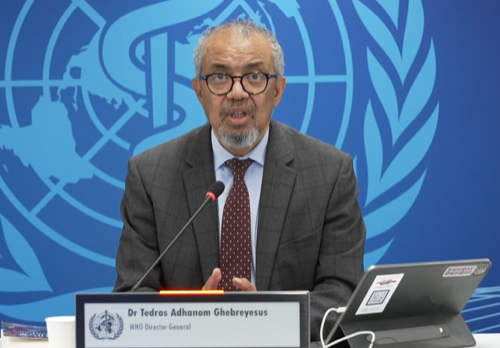
During a recent press briefing in Geneva, Switzerland, World Health Organization (WHO) Director-General Dr Tedros Adhanom Ghebreyesus acknowledged that, although transmission was slowing in some areas, the emergence of new hotspots continued to present significant challenges.
“In some areas transmission is slowing, but new hotspots continue to emerge. Displacement, rainy weather, attacks on healthcare and difficulties in reaching remote areas are complicating the response,” he said.
The outbreak has also raised concerns beyond the DRC, with neighbouring countries Kenya and Nigeria reporting imported cases.
Dr Tedros confirmed that Kenya had recorded nine cases, including two deaths, while Nigeria had reported one confirmed case. He commended both countries for their response and willingness to report the infections.
“I commend Kenya and Nigeria for their rapid response to these imported cases, and for their transparency in reporting them,” he said.
The spread of the virus has prompted several governments to introduce precautionary measures, including travel restrictions targeting people arriving from countries considered high-risk for transmission.
St. Kitts and Nevis is among the countries that have tightened its entry requirements. In a recent media advisory, the Government said that, based on the latest guidance from the Caribbean Public Health Agency (CARPHA), the US Centers for Disease Control and Prevention (CDC) and the WHO, eight countries remain classified as high-risk areas for Ebola transmission and/or importation.
The countries identified in the advisory include the Democratic Republic of Congo, Uganda, South Sudan, Rwanda, Kenya, Burundi, nigeria, and Central African Republic.
The Government said the restrictions would take immediate effect and apply to non-nationals who had visited any of the designated countries within 21 days before travelling to the Federation.
“Therefore, non-nationals who visited any of these countries within 21 days of their flight will not be allowed to enter the Federation. This includes all non-national passengers with an intermediate stop in either of these six countries regardless of whether they disembark or remain onboard the aircraft.,” the Government stated.
International efforts to support the Ebola response are also being intensified. The Group of 20 (G20) countries recently mobilised more than US$2 billion to assist with efforts to combat the outbreak and strengthen the broader public health response.
Meanwhile, the WHO is pursuing vaccine research specifically targeting the Bundibugyo strain of Ebola, which has presented additional challenges because existing approved vaccines do not provide protection against that strain.
Dr Tedros explained that a vaccine trial using the Ervebo vaccine had begun the previous month. Although Ervebo is approved for use against Ebola virus disease caused by the Zaire ebolavirus, it is not approved for the Bundibugyo virus.
“Last month, a vaccine trial began using the Ervebo vaccine, which is approved for Ebola virus, but not for Bundibugyo virus. Today, WHO expert groups are recommending adding two vaccine candidates to the trial that have been developed specifically for Bundibugyo virus,” he said.
Beyond Ebola, the DRC is also confronting a worsening cholera outbreak, adding further pressure to an already strained healthcare system.
Dr Tedros said the country was experiencing its worst cholera outbreak in decades, with more than 60,000 cases and 1,800 deaths reported so far this year.
“The DRC is also seeing its worst cholera outbreak in decades,” he said.
The overlapping health emergencies, coupled with ongoing insecurity, displacement and difficulties accessing affected communities, continue to place enormous pressure on the country's ability to respond.
For the WHO and its humanitarian partners, containing the Ebola outbreak will require more than medical intervention. Ensuring security, maintaining access to affected communities and strengthening cooperation among neighbouring countries will be critical to preventing further loss of life and limiting the international spread of the virus.