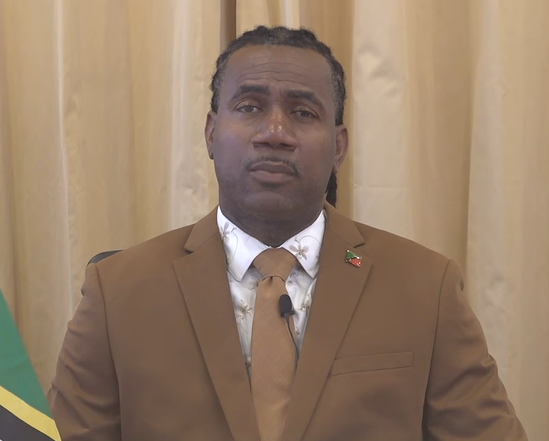
BASSETERRE, St. Kitts – WITH the European Union reportedly giving Caribbean Citizenship by Investment (CBI) countries until November 12 to communicate their decisions on the future of their programmes, leader of the People’s Action Movement (PAM), Shawn Richards, has criticised the government for what he describes as a lack of transparency.
Richards warned that St. Kitts and Nevis could be heading towards serious economic difficulties, arguing that the country is approaching a critical turning point and that urgent action is needed to prepare for the possible closure of the CBI programme.
“St. Kitts and Nevis is in trouble,” Richards asserted, emphasising that the economy is at a tipping point and that “unless urgent and decisive action is taken, the days ahead will be extremely difficult”.
“When the economic bubble bursts, it will not be the politicians who suffer most. It will be our poor, our working-class families and those who are already struggling to make ends meet,” he noted.
His comments come against the backdrop of recent statements by Antigua and Barbuda Prime Minister Gaston Browne, who disclosed that his country had been given until November 12 to communicate its position to the European Union on the winding down of its CBI programme.
Richards said the uncertainty surrounding the programme's future makes it even more important for the government to keep citizens informed about the potential economic consequences.
“What is particularly troubling is that many citizens are unaware of the dangers that lie ahead because this government has failed to tell them the truth about the seriousness of our situation,” he contended.
He also criticised the Dr. Terrance Drew-led Labour Administration, accusing it of appearing “more concerned with managing information than managing the country's affairs”.
The Member of Parliament for Constituency Five argued that the government seems content to keep the public in the dark, possibly hoping to get through another election before disclosing the difficult decisions being considered behind closed doors.
Over the past several years, Citizenship by Investment programmes across the Caribbean have faced increasing scrutiny, particularly over security concerns and the vetting of individuals granted citizenship through these schemes.
The European Union has repeatedly raised concerns about the security implications of investor citizenship programmes, warning that countries operating such schemes could face the suspension or withdrawal of visa-free access to the Schengen Area.
Although Caribbean governments have defended their programmes, pointing to extensive due diligence and screening procedures, concerns within the European Union have continued to intensify.
“...if the government gets its way, it may be too late for the people to have a meaningful say in decisions that will affect their lives,” Richards added.
With Thursday's (November 12) deadline approaching, the opposition MP maintained that transparency remains absent from the government's handling of the matter.
Richards explained that on June 25, 2026, European Union officials wrote to St. Kitts and Nevis and four other Organisation of Eastern Caribbean States (OECS) countries, requesting the closure of their respective CBI programmes.
He further outlined a series of discussions between Caribbean governments and European officials that have since shaped the timeline for a possible shutdown.
During a meeting on September 23, 2026, on the margins of the United Nations General Assembly in New York, EU officials reportedly asked countries operating CBI programmes to communicate their decisions to terminate the initiatives by the end of October 2026.
That deadline was subsequently extended to November 12, 2026, following a technical meeting in Brussels on October 28.
According to Richards, European Commission officials responsible for internal affairs and migration presented three possible options to countries operating the programmes.
The first option would allow countries to continue operating their CBI programmes while accepting the suspension of visa-free access to the Schengen Area.
Under this arrangement, a decision to suspend visa-free travel could be announced in January 2027 and take effect between March and April of that year.
The suspension would initially be temporary but could become permanent if the necessary steps to terminate the programme were not implemented.
The second option would require countries to terminate their programmes by June 2028, in keeping with conditions established by the European Union.
The third option would allow countries to communicate their intention to close their programmes while requesting a longer transition period to manage the process.
Richards said this option could also provide an opportunity for St. Kitts and Nevis to negotiate financial, technical and other forms of assistance to cushion the economic impact of the eventual closure.
He warned that an immediate shutdown could disrupt ongoing development projects and place hundreds of jobs at risk.
Even a phased closure by 2028, he argued, could expose the country to legal disputes involving developers and financial institutions that have financed projects based on anticipated CBI revenues.
There could also be complications for applicants who have already paid their fees but are still awaiting the completion of their citizenship applications, potentially leading to disputes with service providers.
However, Richards said the greatest concern should be the potential impact on the national treasury and the government's annual budget.
He pointed to the International Monetary Fund (IMF), which has previously highlighted the importance of CBI revenues to small developing economies such as St. Kitts and Nevis.
According to figures cited by Richards, CBI revenue averaged approximately 6.5 per cent of gross domestic product (GDP) between 2019 and 2023. By 2023, those revenues accounted for almost one-third of the country's non-grant government revenue.
Much of the investment generated through the programme has flowed into the construction and tourism sectors, both of which remain major drivers of economic activity in St. Kitts and Nevis.
Richards warned that ending the programme without a carefully managed transition and credible economic alternatives could have devastating consequences.
He also cautioned that the fallout could extend beyond the private sector, affecting social programmes and public infrastructure projects that have benefited from CBI proceeds.
The revenues, he noted, have helped finance schools, hospitals, road development and improvements to the country's water and electricity infrastructure.
Richards reminded citizens that the CBI programme was established under the administration of former Prime Minister Sir Kennedy Simmonds and was intended to serve as an additional pillar of the economy.
He argued that the programme was never designed to become the country's sole source of government revenue or a means of selling its patrimony indiscriminately, but rather to complement tourism development and attract investment.
The PAM leader expressed disappointment that the programme is now facing such an uncertain future under the current Labour Administration.