BASSETERRE, St. Kitts -- THE United States International Development Finance Corporation (DFC) is looking to expand its investment footprint in St. Kitts and Nevis, with a particular interest in energy, critical infrastructure and other sectors that could help drive economic growth.
The agency, established in 2019 as the US Government's international investment arm, is seeking to mobilise private capital to support economic development in partner countries while advancing American foreign policy interests.
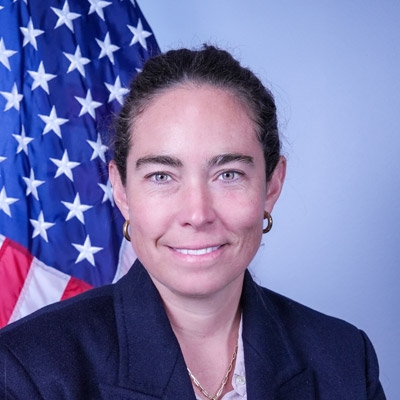
Caroline Vik, Chief Policy Officer of the DFC, visited the Federation on Wednesday (Nov. 18), where she met with officials and private sector stakeholders to explore potential investment opportunities.
Speaking with SKNVibes News, Vik said the agency has approximately US$205 billion in investment capacity and is interested in a range of sectors, including critical minerals, pharmaceuticals, agricultural inputs such as fertilisers and crop protection products, microelectronics and semiconductors.
“Our mission is to advance the economic development of our allies and partners and advance American foreign policy through commercially viable investments. We have debt, equity, political risk insurance,” Vik explained.
She said the DFC also provides loan guarantees and project development funding, including support for early-stage assessments such as feasibility studies, which can help prepare projects for financing.
Vik outlined three broad global objectives guiding the agency's investment strategy: diversifying supply chains for critical materials, strengthening strategic sectors and building critical infrastructure in priority locations.
Energy, information technology and financial services are among the sectors receiving particular attention.
In the energy sector, the DFC is involved in projects spanning power generation and infrastructure, including import terminals, power plants, pipelines, transmission lines and electricity grid modernisation. Its portfolio also includes natural gas, geothermal and hydroelectric projects, with some interest in nuclear energy.
The agency is also looking at investments in data centres and digital infrastructure, including telecommunications, undersea cables and terrestrial fibre networks.
On financial services, Vik said the corporation works with banks and financial technology companies, while also supporting lending opportunities that can stimulate economic activity around major infrastructure developments and mining projects.
Turning specifically to St. Kitts and Nevis, Vik said the Caribbean is a priority region for the DFC and that the agency's immediate objective is to identify projects that align with both its investment priorities and the development needs of individual countries.
“We're here in St. Kitts and Nevis because the Caribbean is a priority region for us. And we are really focused on building our pipeline of investments here,” she said.
She explained that the visit was intended to facilitate discussions with the Federal Government, the Nevis Island Administration and private sector representatives to determine where investment could have the greatest impact.
“We're really excited to hear more about the geothermal prospects, other energy needs and ways we can help lower the cost of electricity, and ensure abundant energy. Also expecting to talk a lot about critical infrastructure,” Vik added.
She emphasized that while the DFC works closely with governments to identify priority areas, its investments are made directly through private sector companies.
“So, while we will coordinate very closely with the government on priority areas, priority projects, all of our counterparties are private sector companies. So we will be lending to private sector companies, investing equity in private sector companies, providing risk insurance to private sector investors. So all of the work will be done directly with the private sector,” she said.
Asked about the agency's approach to small island developing states such as St. Kitts and Nevis, Vik said its intention was to support projects capable of generating meaningful economic opportunities.
“Our goal is to be an active, good partner to St. Kitts and Nevis and help deliver the projects that will make the biggest impact for economic development and economic growth for the country,” she stated.
The discussions come against the backdrop of growing uncertainty surrounding traditional sources of revenue for Caribbean economies, particularly Citizenship by Investment (CBI) programmes, as well as shifting geopolitical and economic relationships.
For St. Kitts and Nevis, where the CBI programme has played a significant role in government revenue and national development, identifying alternative sources of investment and strengthening other productive sectors have become increasingly important.
Vik said the DFC was interested in supporting projects across the region based on the specific needs of each country, whether in energy, ports, other critical infrastructure or water security.
“If that's energy, and that's where we'll focus. If it's ports or other infrastructure that's really needed to unlock growth, then that's where we'll focus. If water is really the problem, then we want to help address that solution,” she noted.
She added that the agency wanted to see investments translate into broader economic benefits for Caribbean countries and their populations.
Reflecting on the meetings held during the visit, Vik said there had been encouraging interest in the DFC's engagement, although discussions were still ongoing and she did not want to draw premature conclusions.
Vik noted that expanding American investment in partner countries was a priority for the current US administration, as well as the State Department and the DFC.
However, she acknowledged that the next step would be turning discussions into actual projects.
For businesses and investors in St. Kitts and Nevis interested in accessing the agency's support, Vik encouraged them to make direct contact with the DFC and provide details about their proposed projects.
“My main message today is that we are looking for deals to do. And so we're eager to hear from any and all businesses that think the DFC could be helpful in investing in their companies and delivering on economic opportunities for the country,” she said.
She explained that interested businesses could submit an initial email outlining their projects, after which the agency would arrange discussions to determine whether the proposals meet its investment criteria.
Vik said the initial assessment of whether a project is strategically aligned with the DFC's priorities could be completed relatively quickly. Projects that move forward would then undergo financial due diligence, which involves a more detailed examination of their financial viability.