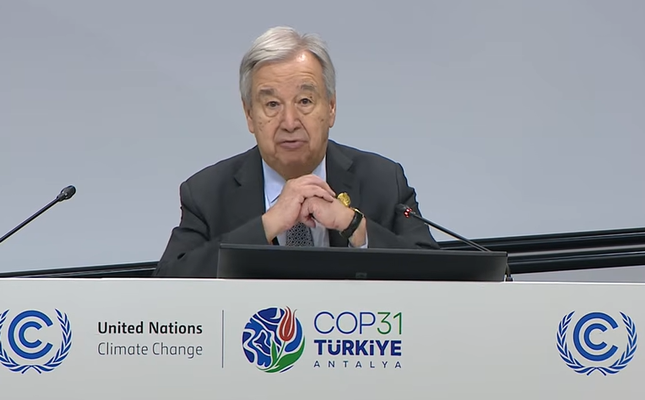
BASSETERRE, St Kitts -- UNITED Nations Secretary-General António Guterres has expressed deep disappointment over the outcome of COP31, which ended without agreement on several key issues in the global fight against climate change, warning that the world is running out of time to limit rising temperatures.
In a statement following the two-week conference in Antalya, Türkiye, Guterres said he shared the frustration of those who expected governments to respond more decisively to the growing climate crisis.
Negotiations extended beyond their scheduled time but ultimately failed to produce consensus on contentious issues, including climate financing, the final wording of the conference outcome and the transition away from fossil fuels, with some countries opposing stronger commitments.
Guterres said the lack of agreement among governments did not change the scientific reality of the crisis.
“There may be no consensus in the negotiating room. There is no ambiguity in the science. Temperatures keep shattering records,” he said.
The outcome comes as climate extremes continue to intensify and global greenhouse gas emissions remain far too high, adding to concerns that countries are falling short of the action needed to address the crisis.
“Every delay makes our task harder and more costly,” the Secretary-General warned.
Guterres said the world was on course to exceed the 1.5-degree Celsius warming limit established under the Paris Agreement, with the window to keep any overshoot temporary and limited rapidly closing.
“The take-home message from COP31 is clear: the world must do much more to confront the climate crisis – and it must do it now,” he noted.
in his statement, the Sg called for greater accountability from industries and interests that profit from fossil fuels, arguing that they should not be allowed to influence efforts to address climate change.
Guterres said the continued reliance on coal, oil and gas was driving global warming, contributing to economic instability through price shocks and undermining energy security.
“We can’t put out the fire while pouring fuel on it,” he said.
He also accused powerful fossil fuel interests of using tactics similar to those employed by the tobacco industry to undermine scientific evidence, delay policies and block climate action while continuing to profit.
At COP28 in Dubai, countries agreed to transition away from fossil fuels in a just, orderly and equitable manner. Guterres said the focus must now be on accelerating that transition and ensuring the financing and resources are available to make it happen.
He welcomed countries advancing concrete plans and called for further action based on roadmaps developed under the Brazilian COP30 presidency to guide the transition away from fossil fuels and reverse deforestation and forest degradation.
The UN Climate Promise, he said, will support countries in turning those plans into action.
Guterres stressed that limiting the extent and duration of global warming beyond 1.5 degrees Celsius would require deep and rapid emissions reductions this decade, with major emitters taking the lead, developed countries delivering climate financing and all nations contributing to the effort.
He also called for greater support for vulnerable countries, particularly those facing the worst effects of climate change despite contributing the least to global emissions.
Developed countries, he said, must honour their commitment to triple adaptation finance and ensure that assistance reaches those most in need, urging governments to attach clear timelines and funding to their pledges.
“The countries that did least to cause this crisis cannot be left to face its worst consequences alone. This is a matter of climate justice,” he said.
The Secretary-General said the success of climate action would ultimately be measured by developments beyond the negotiating rooms, including reduced dependence on fossil fuels, expanded clean energy, modernized electricity grids, lower methane emissions, restored forests and increased financing for developing countries.
He also pointed to the need to better protect people from climate-related disasters, including through the UN's Early Warnings for All initiative.
Guterres reaffirmed the United Nations' commitment to supporting global efforts to address climate change, while thanking Turkish President Recep Tayyip Erdo?an, the government and people of Türkiye, the city of Antalya, COP31 President Murat Kurum, President of Negotiations Chris Bowen and their respective teams, as well as the UN climate secretariat, for their work during the conference.
He also urged civil society, young people, Indigenous Peoples, scientists and communities on the frontlines of climate change to continue pushing for action, even as governments struggle to reach agreement.
Guterres encouraged advocates to continue spreading awareness, demanding action and holding governments and companies accountable, adding that he would stand with them in the fight for climate justice.